

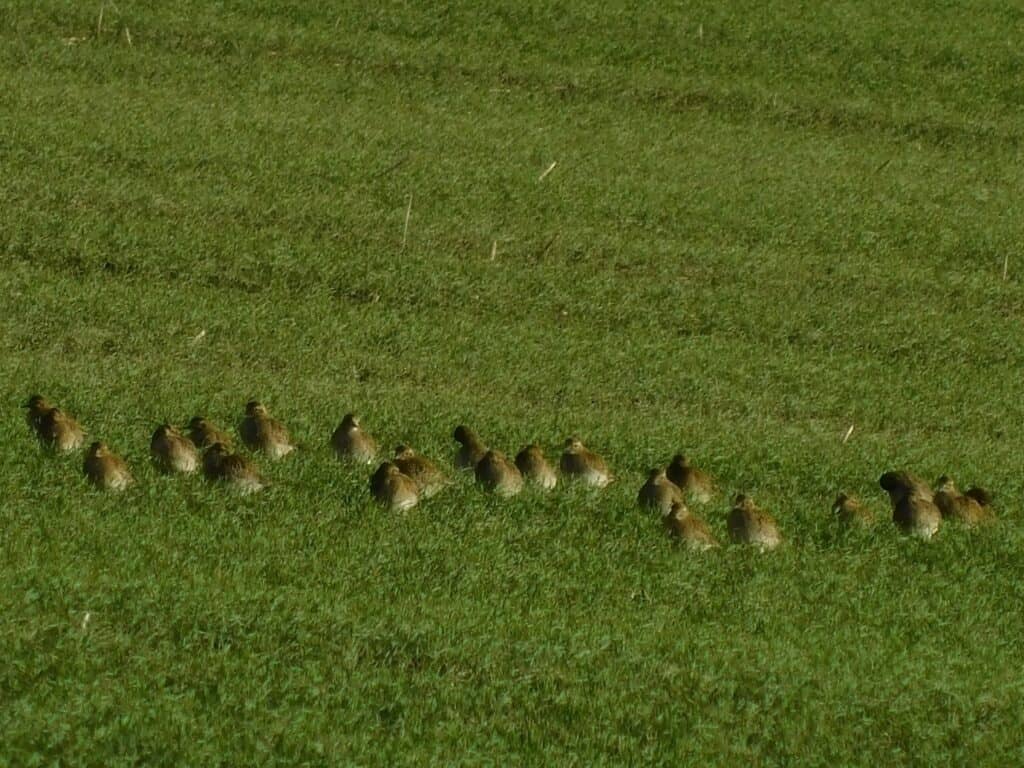
As winter settled over Ireland, the golden plover (Pluvialis apricaria) arrived in vast flocks, painting our wetlands and coastal grasslands with their striking golden-speckled plumage. These migratory birds travel from their Arctic breeding grounds to overwinter here, forming dense, mesmerizing flocks that twist and turn in perfect synchrony—a breathtaking sight for any bird watcher.
Golden plovers start leaving Ireland in early spring, typically from March to April, as they migrate back to their Artic breeding grounds in Iceland and northern Europe. Some may linger into May, depending on weather conditions and food availability.
During winter, they form large flocks in lowland areas, including coastal estuaries, wetlands, and farmland. As spring approaches, their numbers gradually decrease as they prepare for the long journey north, where they breed in Arctic tundra and upland moorlands.
Golden plovers rely on our bogs, estuaries, and farmlands for survival, feeding on invertebrates and plant material. However, habitat loss due to drainage, peat extraction, and agricultural intensification is a growing threat to their wintering grounds. Climate change further disrupts their migration patterns and food availability.
Maintaining wetland integrity, supporting low-intensity farming, and monitoring population trends are crucial to ensuring that future generations can witness the golden plover’s aerial ballet. Veon ecologists and ornithologists conduct bird surveys which help track their numbers.
The Golden Plover is a symbol of Ireland’s rich biodiversity and the intricate connections between land, climate, and wildlife.
#veonecology #ornithology #goldenplover #birdsurveys #biodiversity #wildireland #veon #ecology #conservation #birdwatchireland #irishecology #climatechange #winterbirdsurveys