

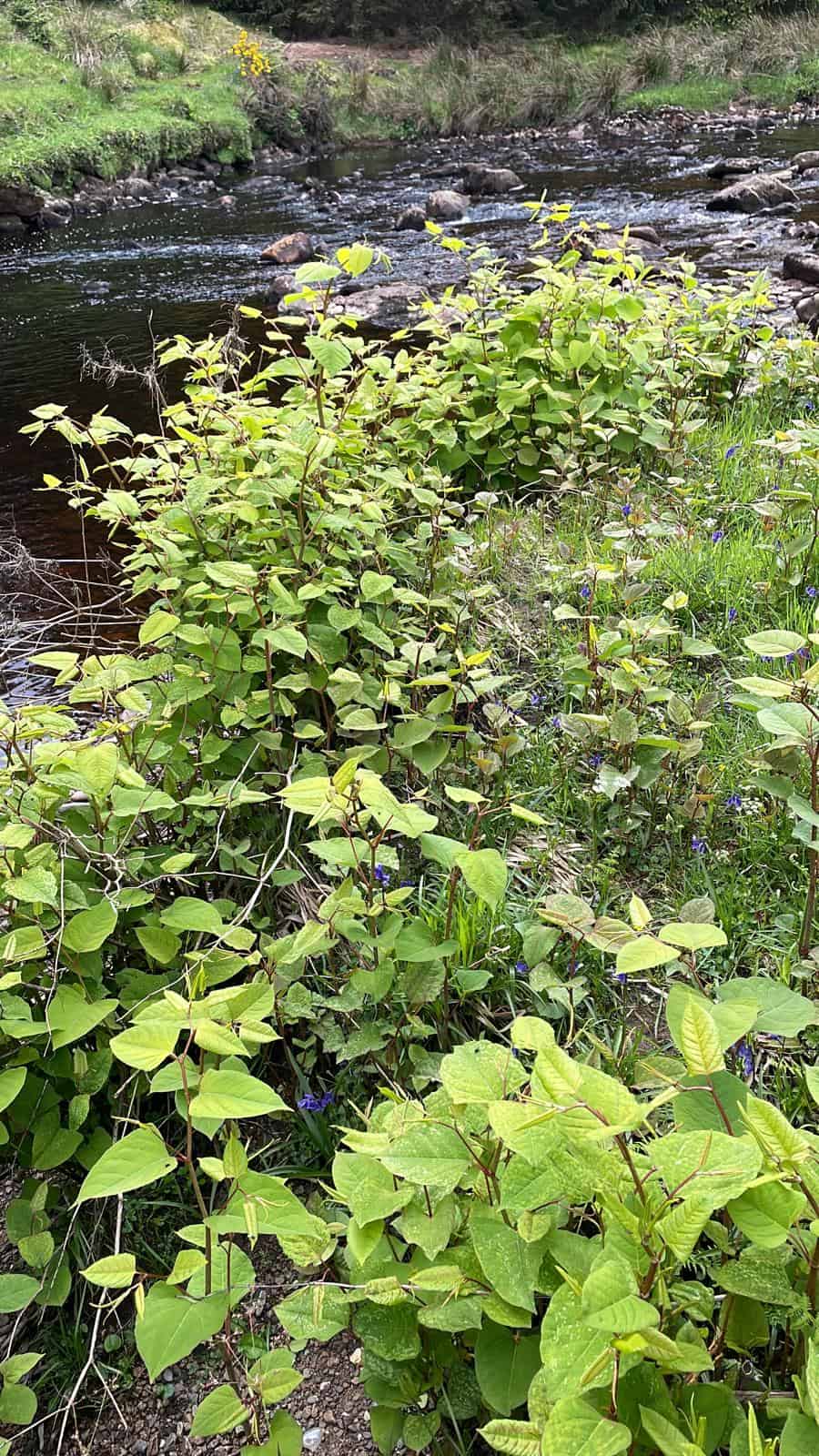
This is definitely not something you should be happy to see when undertaking a forest or habitat survey.
Japanese Knotweed is one of Ireland’s most problematic invasive alien species and is an increasingly common sight on waste ground, the fringes of our waterways and roads and in our wetland habitats.
Japanese knotweed can seriously damage buildings and infrastructure by growing through concrete, tarmac and other hard surfaces causing dangerous and expensive structural damage. It is a robust perennial plant which grows rigorously with the potential to spread rapidly, growing up to 2-3m in one growing season and rapidly out-competes native plants. It forms tall thickets that exclude all other vegetation, shading the area below. The principal means of spread of Japanese knotweed is entirely through the movement of rhizome fragments or cut stems. Japanese knotweed has the extraordinary ability to spread and even tiny amounts of cut stem, crown or rhizome are capable of producing a new plant. Controlling spread is therefore dependent on preventing the spread of the stem, crown or rhizome. Cutting back or trimming of Japanese knotweed must be avoided.
Japanese Knotweed has an underground rhizome system consisting of stems/roots that can stretch horizontally up to 7 meters and it can grow almost anywhere as it tolerates extreme conditions such as low temperatures, acidic soils and waterlogged/saline environments.
Removal of this invasive species is especially difficult when it establishes itself on riverbanks as the plant can affect flood defence structures and increase flood risks.
Specialist removal is the only course of action with this invasive species.
#veonecology #veon #japaneseknotweed #invasivespecies #alienspecies #structuraldamage #habitatloss