

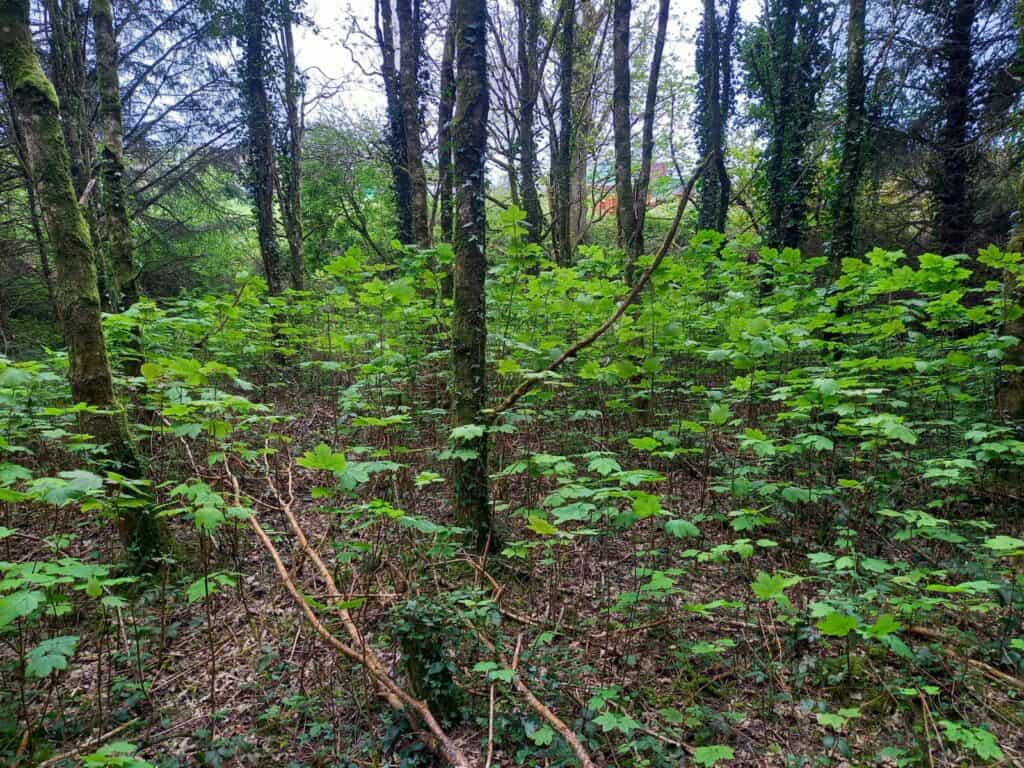
Trees naturally regenerate on their own due to several ecological processes and factors.
Tree canopies and other vegetation help create a microclimate that can be more conducive to seedling survival. They provide shade, reduce soil temperature fluctuations, and increase humidity, which can benefit young trees. Their seeds can be spread by wind, water, animals, or gravity and, under suitable conditions, germinate and grow into new trees.
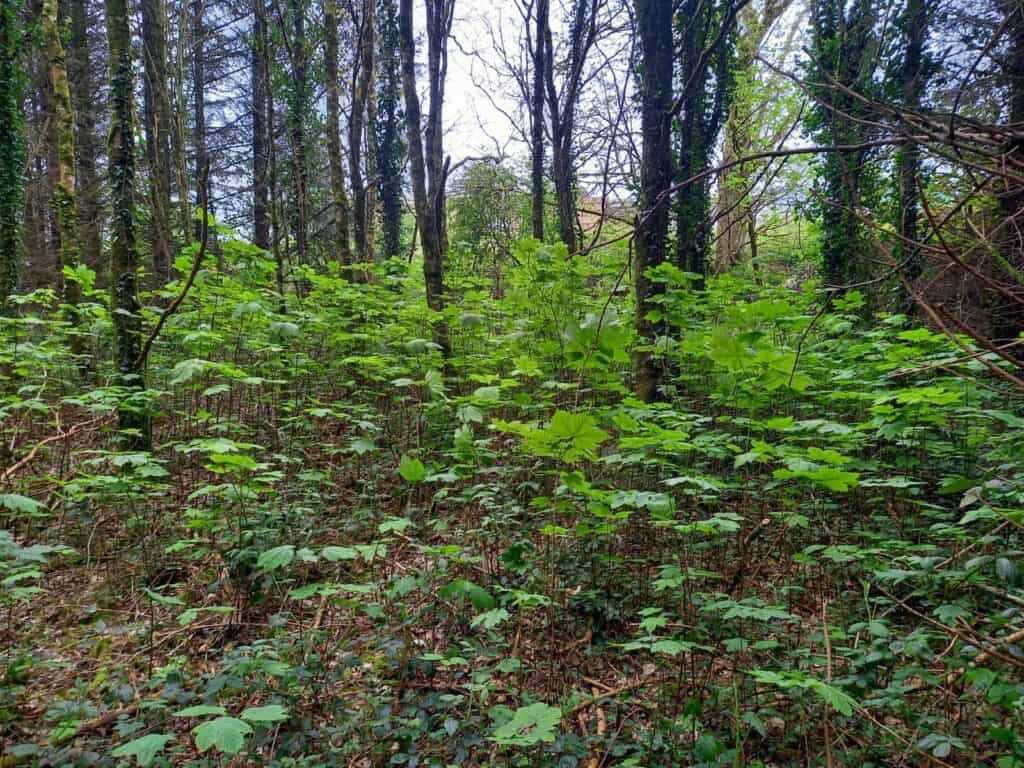
Previously afforested sites may have soils which contain a seed bank, which is a reserve of viable seeds that have been naturally deposited over time and when conditions become favourable, these seeds can germinate and grow.
Birds and mammals, play a role in seed dispersal as they may eat the fruits and nuts from trees and excrete the seeds at different locations, aiding in the spread of tree species. Woodlands typically have less human interference, allowing natural processes like nutrient cycling, soil formation, and the establishment of plant communities to occur.
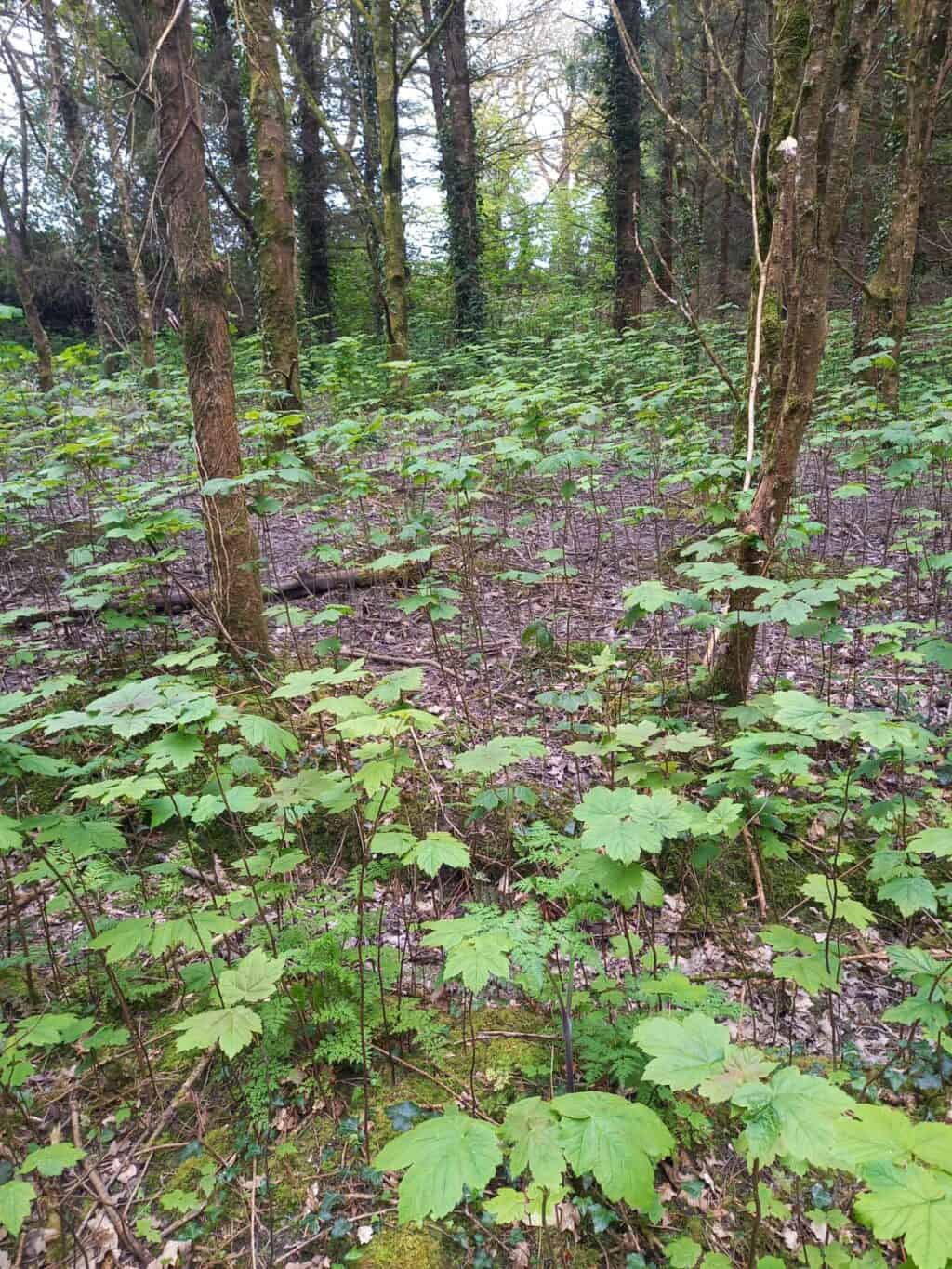
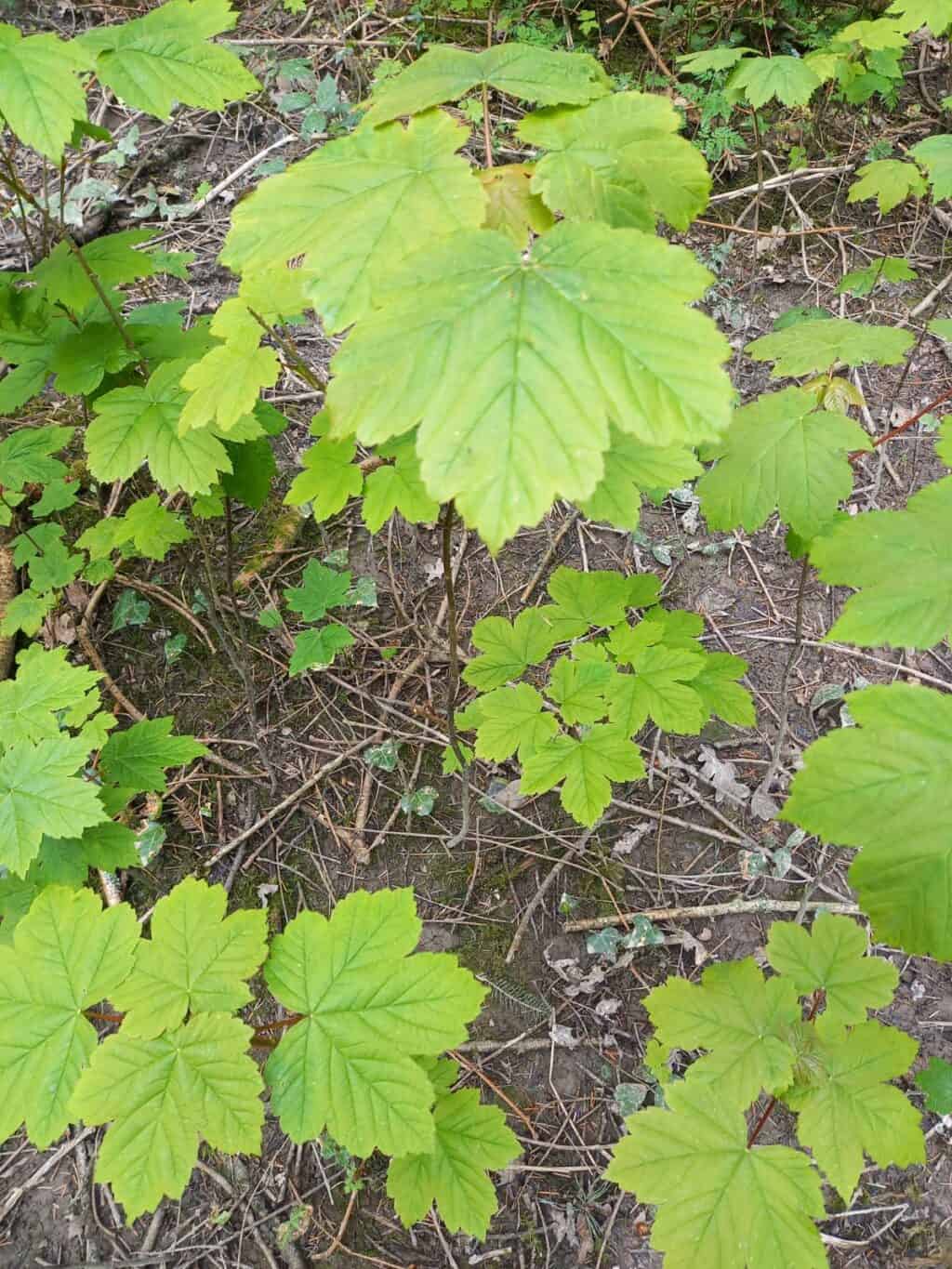
Natural regeneration, as seen with the sycamore on this forest floor, is part of ecological succession, where plant communities change over time. Initially, pioneer species (fast-growing, hardy plants) colonize the area, creating conditions that allow more tree species to establish and grow.
These processes collectively contribute to the natural regeneration of trees when land is left on its own.
#regeneration #veonforestry #sycamore #nativetrees #forest #woodlands #veon #cork #ccf #forestmanagement #forestfloor #veonecology #veonarboriculture #biodiversity