

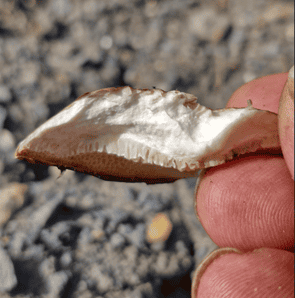
Cerioporus squamosus, formerly known as Polyporus squamosus and commonly called Scaly Polypore Dryad’s Saddle or Pheasant’s Back fungus, is a widespread polypore mushroom found predominantly on dead or dying hardwood trees. Recognizable by its large, fan-shaped cap covered with brown, scaly markings, that resembles the pattern of a pheasant’s plumage (100-400mm across). The underside features creamy white pores rather than gills (image 2 & 4), which release white spores. This fungus typically appears annually from April to December (under suitable conditions), although mostly seen fruiting during late summer. C. squamosus plays an important role in woodland ecosystems by helping decompose wood and recycle nutrients. While edible when young, it becomes tough and inedible with age.
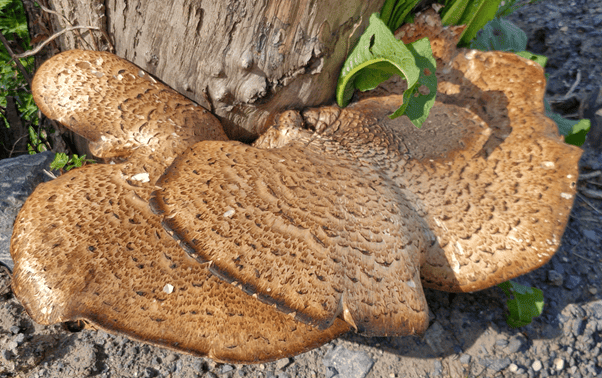
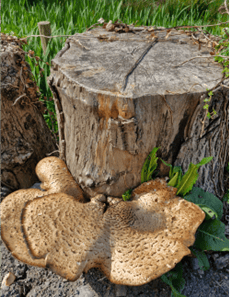
Image 1. Shows fruiting body on ash stump. Ballymote, Co Leitrim.
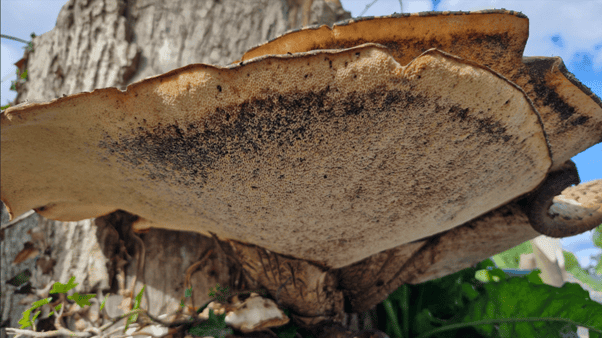
Image 2. Shows underside of bracket showing pores rather than gills.
The arboricultural significance of Cerioporus squamosus is due to its role as both a saprobe and a weak parasite. It primarily colonizes broadleaf trees such as sycamore, beech, elm, and occasionally maple and willow, entering through wounds or pruning cuts. As a saprophyte it mainly feeds on deadwood, it can persist on living trees, gradually causing white rot by breaking down lignin and cellulose in the heartwood. This internal decay colonisation is generally limited, however, it can compromise the structural integrity of mature trees over time, increasing the risk of limb failure or collapse, particularly when the fungus spreads into dysfunctional wood and coalesces multiple pruning wounds. Its presence is considered a sign that internal white-rot ( so called due the decaying the cellulose at a lesser rate than the lignin) of sapwood or ripewood may be present, warranting further investigation through decay detection tools or microdrill testing. While not as aggressive as some other wood-decay fungi, C. squamosus will require careful monitoring in urban or high-risk environments where tree failure would pose safety concerns.
#veonarboriculture #ashtrees #cerioporussquamosus #leitrim #irishforestry #fungi #trees #hardwoodtrees #arboriculture #treesurveys #veon