


The badger often resides in a social group referred to as a cete or clan. Each clan shares a territory that includes feeding areas and one or more setts. The size of the clan and the territory depends on the availability of food resources.
Badgers are predominantly active at night. They do not hibernate during winter but reduce their activity during cold periods. At the beginning of the main mating season, badger activity increases, leading to a rise in road accidents in late winter or early spring. During the summer, most of their activity centers around the setts and feeding areas, as well as traveling between locations. In autumn, badgers intensify their feeding activity to build up body fat reserves for the winter.


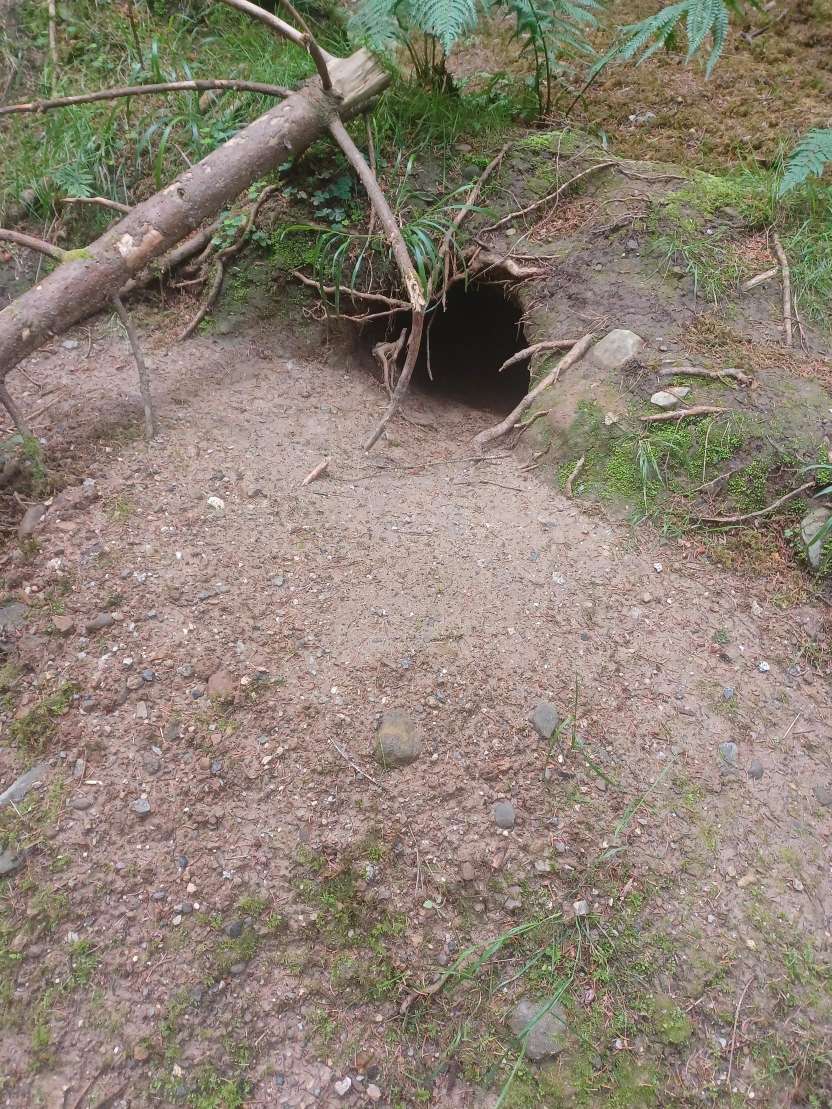

Badgers inhabit a network of interconnected tunnels and chambers called a sett. Each badger clan has a primary sett, primarily used for breeding, which tends to be relatively large. Established setts have been excavated over multiple generations and some have been occupied for centuries. The size of the sett is influenced more by the type of soil than by the number of badgers living in it.
Aside from the primary sett, clans often have one or more secondary setts. Although less significant than the main sett, these secondary setts serve as useful alternatives, particularly if the main sett is disturbed or there are disruptions within the clan’s social structure. Abandoned setts may be taken over by rabbits or foxes, and both species have been observed cohabiting with badgers in occupied setts.
Inside the sett’s chambers, badgers create nests where they sleep. Periodically, they collect fresh bedding material such as dry grass, straw, bracken, or dead leaves and bring it into the sett. Setts can be found in wooded areas, scrubland, or more recently, in hedgerows within improved pasture areas.
Badger tunnels typically have a distinct shape, being wider than they are tall with a flat base. In contrast, tunnels dug by foxes and rabbits tend to be rounder or oval-shaped and taller than they are broad. Badger tunnels have a diameter of around 30cm, but never smaller than 25cm. Rabbit tunnels may have larger entrances but quickly narrow down to a diameter of approximately 15cm.