


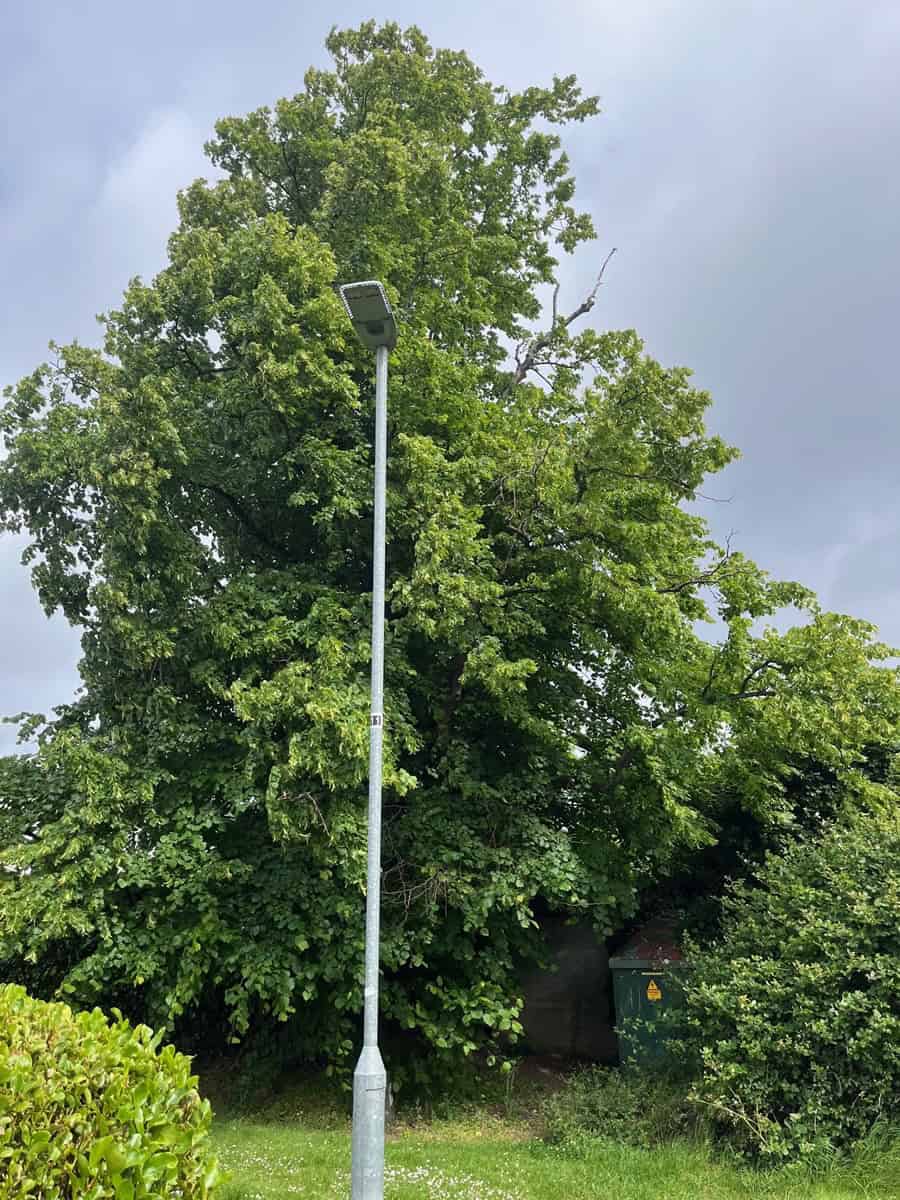
Tree assessment always requires thoroughness. For example, the crown of this mature common lime (Tilia x europaea), on the boundary of residences, seems generally healthy. However, minor dead wood development on one side of the crown promoted a Veon arboriculturist to investigate further.
The result – extensive decay of the lower trunk and structural roots. The culprit – brittle cinder fungus (Kretzschmaria deusta). This aggressive basal decay fungus initially degrades the tensile-strong cellulose fibres, making wood brittle, before ultimately degrading the compressive-strong lignin fibres.
Many wood decay pathogens only affect the “non-living” wood, it is therefore uncommon for those fungi to obviously affect the tree’s physiological processes – hence the crown appearing ”generally healthy”, and this can often lead to an overlook during assessment.
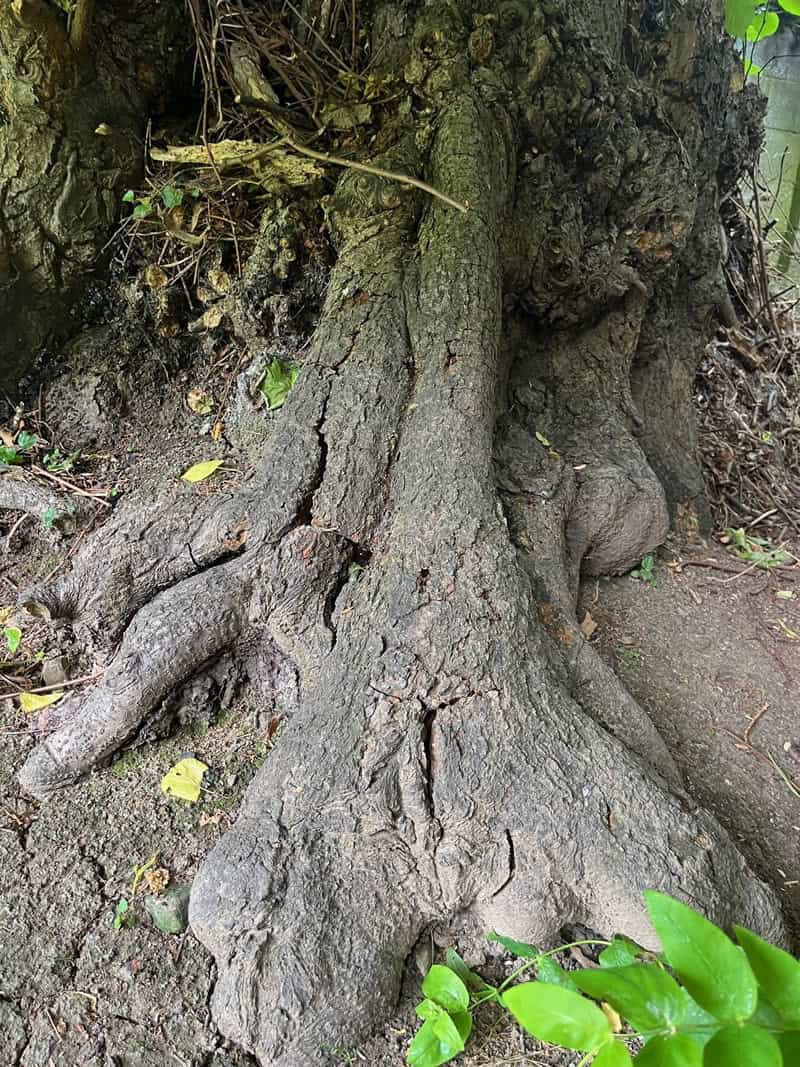
In this tree’s case, the decay/dysfunction has become so extensive that there is a disconnect between the roots/base and the crown above, and a correlation can be drawn between this decay/dysfunction and the dead wood in the crown – which is on the same side.
I would suggest that there is often a “disconnect” between what’s going on physiologically and what’s going on structurally – necessitating the need for a detailed tree assessment – always!
Veon Arboriculture expertly assess trees! Our arboriculture specialists are qualified to carry out a range of assessments and surveys to determine the health, quality and safety and protection of trees on sites. In conjunction with our other specialists in Veon Ecology and Veon Forestry we offer unrivalled experience and expertise.
#veon #treeriskassessments #arboriculture #limetree #veonarboriculture #treedisease #biodiversity #risk #treedecay #trees #treeinvestigation