

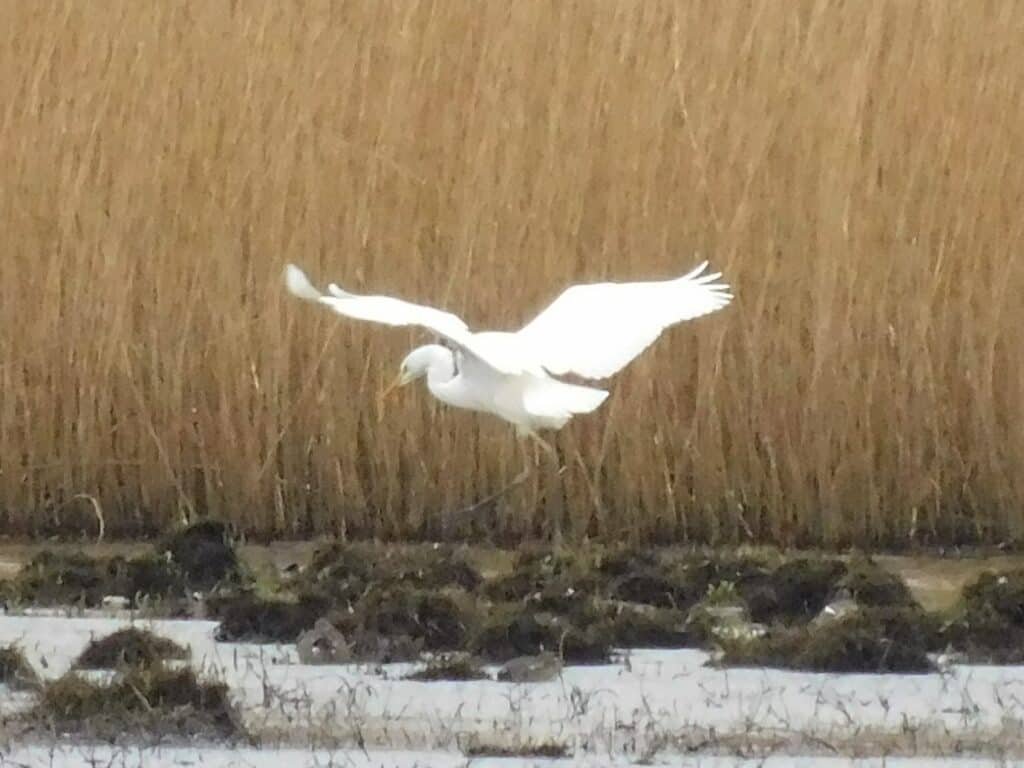
Once a rare visitor, the Great White Egret (Ardea alba) is now becoming a more familiar sight in Ireland’s wetlands as evidenced by Veon ornithologists when surveying wetlands in Co. Roscommon last week. These elegant, long-legged waders—pure white with striking yellow bills—were once confined to warmer European regions, but climate change and habitat restoration have encouraged their spread.
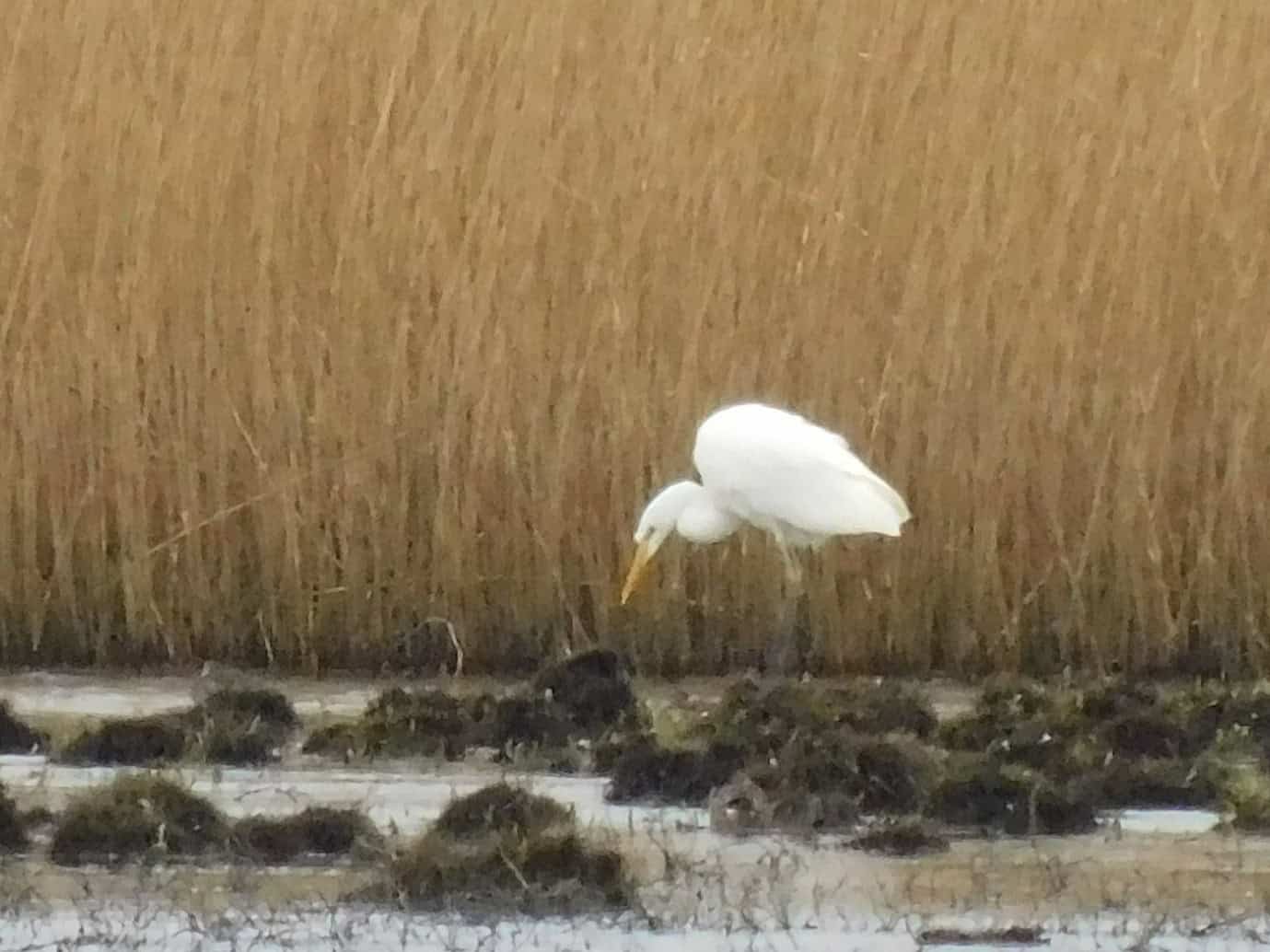
In the past two decades, sightings of Great White Egrets have increased, particularly in Shannon Callows, Lough Neagh, and Wexford Slobs. Their growing presence signals positive ecological changes, such as improved wetland management and biodiversity conservation efforts. But it also raises concerns: their expansion northward is likely linked to rising global temperatures, highlighting the broader impact of climate change on bird distributions.
As opportunistic feeders, they hunt fish, amphibians, and insects, playing a vital role in balancing wetland ecosystems. Their success in recolonizing Irish landscapes suggests that our conservation strategies—such as wetland restoration—are working. However, continued protection of these habitats is crucial for their survival.
Seeing a Great White Egret in Ireland is a reminder that nature is resilient—if we give it the space to thrive.
#veon #wildireland #ornithology #roscommon #winterbirdsurveys #greatwhiteegret #ecosystem #biodiversitymatters #wetlands #conservation #habitatsurveys #naturerestoration #veonecology #climatechange