

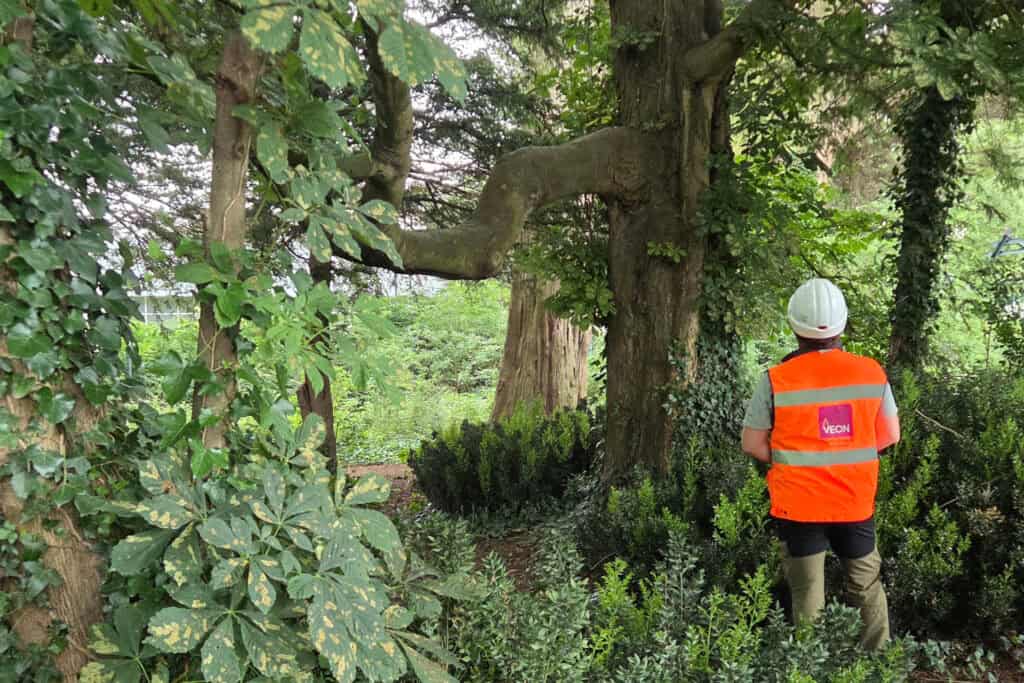
Trees are often seen as a constraint in the planning and development process. They can be perceived as something to be surveyed after a design has already been prepared, or as an issue to be dealt with only when a planning authority requests further information. In reality, the opposite is true. Trees are best considered at the very beginning of a project.
Engaging an arboriculture professional early in the planning and development process can help project teams make better decisions, reduce planning risk, protect valuable site assets, avoid unnecessary redesign, and demonstrate a responsible approach to environmental compliance. For landowners, developers, architects, planners, engineers, local authorities and public bodies, early arboricultural input is not simply a technical exercise. It is a practical way to improve project outcomes.
In Ireland, trees can intersect with planning, environmental, biodiversity, landscape, heritage, health and safety, and construction management requirements. Planning authorities may protect trees through Tree Preservation Orders under Section 205 of the Planning and Development Act 2000. Tree felling may also require a felling licence under the Forestry Act 2014 unless an exemption applies. In addition, vegetation clearance must be carefully managed around the bird nesting season, as Section 40 of the Wildlife Act 1976 restricts cutting, grubbing, burning or destruction of vegetation growing on uncultivated land between 1 March and 31 August each year.
This means that trees on a development site are not merely landscape features. They may be legal, ecological, engineering and design considerations. They may influence where buildings, roads, services, drainage, lighting, access routes, compounds and public open space can be located. They may also influence when work can start, how construction is sequenced, what mitigation is required, and how compliance is demonstrated.
An arboriculture professional helps to bring clarity to these issues before they become problems.
Trees should inform design, not react to it.
One of the greatest benefits of engaging an arboriculture professional early is that trees can be properly assessed before the project design becomes fixed. At the feasibility stage, there is usually more flexibility. Building footprints can be adjusted. Access points can be refined. Car parking layouts can be altered. Services can be routed differently. Construction zones can be planned more carefully. Public open space can be designed around existing mature trees rather than imposed after the fact.
Once a design has progressed too far, however, tree issues can become more difficult and expensive to resolve. A tree that was initially ignored may later be found to be of high value, protected, ecologically important, or technically difficult to remove. A proposed foundation line may fall within a root protection area. A drainage route may cut through a sensitive rooting zone. A crane base, site compound, haul road or materials storage area may be proposed in a location that would damage retained trees. These issues are often avoidable when arboricultural advice is brought in early.
BS 5837:2012, “Trees in relation to design, demolition and construction – Recommendations”, provides recommendations for achieving a sustainable relationship between new construction and existing trees. While it is a British Standard, it is widely referenced in Irish planning and development practice, particularly for tree surveys, arboricultural impact assessments, tree constraints plans and tree protection plans. The key principle is straightforward: assess the trees first, understand the constraints and opportunities, and then allow that information to influence the design.
Early arboricultural input provides the design team with a solid baseline. It identifies which trees are valuable, unsuitable for retention, have limited life expectancy, are vulnerable to construction damage, or could become long-term assets in a finished development. This information allows the project team to distinguish between genuine constraints and manageable issues.
The result is a more informed design process.
Reducing planning risk
Planning risk is one of the most important reasons to involve an arboriculture professional at the earliest stage. If a planning application does not properly address existing trees, the planning authority may request further information, attach restrictive conditions, require design amendments, or raise concerns about the adequacy of the submitted material.
For developers and design teams, delays of this kind can be costly. A request for further information can interrupt programme momentum, increase professional fees, create uncertainty for funders or stakeholders, and place pressure on the design team to resolve issues quickly. In some cases, a late-stage tree issue can require substantial redesign.
Early arboricultural input reduces this risk by ensuring that tree-related information is available when the planning strategy is being developed. A professional tree survey can identify the species, dimensions, condition, life expectancy, quality and retention value of trees on or near the site. An arboricultural impact assessment can then explain how the proposed development would affect those trees, and a tree protection plan can set out how retained trees will be protected during demolition and construction.
This is valuable not only for planning authorities but also for the project team. It shows that the applicant has taken a measured, evidence-based approach. It allows the planning submission to explain why certain trees are retained, why others may need to be removed, and how replacement planting or mitigation will be managed.
In a planning environment where environmental considerations are increasingly important, this matters. Ireland’s 4th National Biodiversity Action Plan 2023–2030 sets the national biodiversity agenda and aims to change the way nature is valued and protected. Planning authorities, public bodies and corporate clients are increasingly expected to demonstrate that environmental issues have been considered early, seriously and transparently.
A well-prepared arboricultural submission can help to do exactly that.
Understanding legal and statutory constraints
Trees may be subject to a range of legal and statutory considerations. Some constraints are obvious; others are not. This is another reason why early professional advice is so valuable.
A planning authority may make a Tree Preservation Order where it considers it desirable to preserve trees, groups of trees or woodlands on amenity grounds. A TPO can restrict works such as cutting down, topping, lopping, uprooting, or damaging protected trees without the planning authority’s permission. If a protected tree is present on or near a development site, it can directly influence design, planning, and construction methodology.
Separately, felling trees in Ireland may require a tree felling licence unless an exemption applies. The Department of Agriculture, Food and the Marine states that a felling licence provides authority under the Forestry Act 2014 to fell or otherwise remove trees. The Department also notes that it is illegal to cut down any tree unless a felling licence has been issued, subject to certain exemptions.
These requirements can be misunderstood. The fact that a tree is on private land does not automatically mean it can be removed without consideration. The fact that planning permission has been granted does not remove the need to understand other relevant legal obligations. The fact that a tree appears to be in poor condition does not remove the need for proper assessment and documentation.
An arboriculture professional can help the client and design team understand what questions need to be asked. Is there a Tree Preservation Order? Is the tree within a conservation-sensitive setting? Is a felling licence required? Is the tree part of a hedgerow, woodland, treeline or landscape feature? Is there potential for bats, nesting birds or other protected species? Are there planning conditions relating to tree retention or replacement planting? Are there local development plan objectives relating to landscape, green infrastructure, biodiversity or amenity?
Early advice does not replace legal advice where legal interpretation is required, but it helps identify risk and directs the project team towards the correct process.
Protecting biodiversity and ecological value
Trees are often valuable ecological features. They may provide nesting habitat for birds, roosting opportunities for bats, foraging corridors, shelter, food sources, deadwood habitat, soil stability, and connectivity to other habitats. On some sites, individual trees may be less important in isolation but highly important as part of a hedgerow, woodland edge, riparian corridor or green infrastructure network.
This ecological role is especially important in Ireland, where development teams are increasingly expected to consider biodiversity from the earliest stages of a project. The National Parks and Wildlife Service provides guidance on Appropriate Assessment for planning authorities in the context of Natura 2000 sites and the Habitats Directive. The EPA also identifies Environmental Impact Assessment as a process connected with assessing the environmental effects of development consent applications.
Trees can be relevant to both processes. They may form part of the baseline environment. They may support protected species. They may contribute to ecological connectivity. They may also be part of mitigation or enhancement proposals.
Bats are a particularly important consideration. NPWS bat mitigation guidance notes that bats use a wide variety of roosts, including trees, buildings and underground places, and that all nine Irish bat species are protected under Annex IV of the Habitats Directive. If mature trees contain cavities, cracks, ivy cover, loose bark or other potential roosting features, they may require specialist ecological assessment before works proceed.
Nesting birds are another important issue. Section 40 of the Wildlife Act 1976 restricts the cutting or destruction of certain vegetation between 1 March and 31 August annually, primarily to protect birds during the nesting season. Poor timing can therefore create programme risk. A site clearance operation that might appear straightforward in January could be significantly more complex in April, May or June.
Early arboricultural input allows these issues to be flagged and coordinated with ecological advice. Where arboriculture and ecology teams work together from the outset, the project can better manage seasonal constraints, protected species risk, tree retention, hedgerow protection, lighting impacts, root protection, and biodiversity enhancement.
This integrated approach is particularly important for Government bodies and corporate clients who must demonstrate environmental responsibility and legislative compliance.
Avoiding unnecessary tree loss
Not every tree can or should be retained. Some trees are in poor condition. Some are structurally compromised. Some are inappropriate for their location. Some may be early-mature or low-value specimens that can reasonably be removed and replaced as part of a better long-term landscape strategy.
However, unnecessary tree loss remains a common problem on development sites. It often happens because trees are assessed too late, after the layout has already been designed. At that point, removal can become the default option, even where a modest design adjustment might have allowed good trees to be retained.
Early arboricultural advice helps project teams make better distinctions. It identifies high-value trees that should be treated as design assets. It identifies moderate-value trees that may be retained if compatible with the development. It identifies low-value or poor-quality trees where removal may be appropriate. It also identifies trees that may be unsuitable for retention because of defects, poor physiological condition, limited remaining contribution, or unacceptable future conflict with the proposed development.
This matters because mature trees are difficult to replace. A newly planted tree may be valuable, but it cannot immediately replicate the canopy, visual presence, habitat value, shading, carbon storage, cultural value or placemaking function of a mature specimen. Where good existing trees can be retained, they can provide immediate character and maturity to a completed scheme.
For housing developments, schools, campuses, public realm projects, healthcare settings, commercial sites and infrastructure corridors, existing trees can soften the built form, improve the setting, create identity, provide shade, and contribute to a more attractive environment from day one. That is a significant benefit for planning, marketing, community acceptance and long-term estate management.
Improving design quality and placemaking
Trees are not only constraints. They are assets. A mature oak, beech, lime, plane, sycamore, ash, Scots pine or group of boundary trees can give a site structure and identity long before any new building is constructed. When successfully retained, trees can help create attractive entrances, usable open spaces, shaded pedestrian routes, natural boundaries, screening, habitat corridors, and a distinctive public realm.
This is where early arboricultural advice can add design value. By identifying the best trees at the outset, the arboriculture professional helps the project team understand how the site already works as a landscape. Which trees define the character of the site? Which trees are visible from public roads? Which trees screen neighbouring properties? Which trees contribute to amenity? Which trees are vulnerable to wind exposure if surrounding trees are removed? Which areas offer the best opportunity for long-term canopy cover?
These questions are highly relevant to design quality. A development that ignores existing trees can feel harsh, exposed and disconnected from its landscape context. A development that integrates trees intelligently can feel established, considered and more acceptable to the local community.
For public sector clients, this is particularly important. Public projects are often expected to show leadership in sustainability, climate adaptation, biodiversity and good design. For corporate clients, tree retention can support ESG objectives, employee wellbeing, placemaking and stakeholder confidence. For residential developers, trees can support visual amenity, landscape quality and saleability.
Early arboricultural advice helps ensure that trees are considered as part of the design strategy rather than dealt with as a compliance issue after the design is complete.
Managing construction risk
Many trees are not lost at the planning stage. They are lost during construction.
Damage to roots, soil compaction, changes in ground level, trenching, material storage, fuel spills, bark damage, careless pruning, altered drainage, and repeated vehicle movement can all cause serious harm. The damage may not be immediately visible. A tree can appear healthy at project completion but decline over the following years because its rooting environment was damaged during construction.
This is why tree protection must be planned before construction begins. The aim is not simply to draw a line around a tree on a plan. The aim is to understand how the construction process will work in practice and to ensure that retained trees are protected throughout the process.
Early arboricultural advice allows tree protection to be integrated into the construction methodology. This may include protective fencing, ground protection, exclusion zones, special engineering solutions near roots, arboricultural supervision, no-dig construction, service routing, storage restrictions, demolition sequencing, pruning specifications, and contractor briefings.
Transport Infrastructure Ireland guidance states that tree preservation should be based on informed evaluation and best-practice arboricultural principles integrated into the planning and design stage. This principle applies well beyond road schemes. If trees are to be retained, protection must be realistic, buildable and enforceable.
A tree protection plan that cannot be implemented on site is of limited value. Early engagement allows the arboriculture professional to work with architects, engineers, project managers and contractors to identify practical solutions. Where unavoidable works are required near retained trees, the arboriculturist can advise on appropriate methods and supervision.
This reduces the risk of accidental damage, planning non-compliance, enforcement issues, neighbour complaints, reputational damage and costly remedial works.
Supporting better project programming
Timing is a major issue in development. Tree-related constraints can affect planning, enabling works, site clearance, demolition, construction sequencing, ecological surveys and mitigation.
If trees are assessed late, the project may discover seasonal restrictions or licensing requirements after the programme has already been set. This can create an avoidable delay.
For example, vegetation clearance may be affected by bird nesting season restrictions between 1 March and 31 August. Trees with bat roost potential may require ecological survey work at appropriate times of year. Tree felling may require confirmation of licensing requirements. Planning conditions may require arboricultural supervision or pre-commencement submissions. Works near retained trees may require specialist methods that need to be priced and programmed.
Early arboricultural advice helps the project team understand these issues at the start. This allows time for surveys, design amendments, consultation, method statements, licences, mitigation, replacement-planting proposals, and construction planning.
This is particularly valuable for public bodies and corporate clients who must manage procurement, governance, budgets and programme commitments. A tree issue that is discovered early can usually be managed. A tree issue discovered just before mobilisation can become a major problem.
Reducing cost through early decision-making
Early professional advice is usually more cost-effective than late-stage problem solving.
When arboricultural input is delayed, the project may incur avoidable costs due to redesign, additional surveys, planning delays, legal uncertainty, contractor claims, site changes, replacement planting, tree surgery, engineering modifications, or compliance issues. These costs can be disproportionate compared with the cost of early assessment.
A tree survey at the feasibility stage can inform acquisition decisions, site layout, density assumptions, access design, drainage strategy and construction planning. It can help identify whether a site has serious constraints before large sums are committed to design development. It can also identify opportunities to retain valuable trees in ways that enhance the scheme.
This is particularly important in urban and suburban sites, where space is limited and competing demands are high. A retained tree may influence basement design, parking layout, apartment block position, footpath alignment, boundary treatment, attenuation systems, lighting design and public open space. If these issues are understood early, they can be resolved efficiently. If they are discovered late, they can become expensive.
Good arboricultural advice does not simply say “retain” or “remove”. It helps the client understand consequences, options and trade-offs. That is where value is created.
Strengthening planning submissions
A strong planning submission should explain how tree issues have been considered. This does not mean simply attaching a tree survey. It means showing a clear line of reasoning.
A good arboricultural submission can answer the questions a planning authority is likely to ask:
- What trees are present on and near the site?
- What condition are they in?
- Which trees are most valuable?
- Which trees are proposed for retention?
- Which trees are proposed for removal, and why?
- How has the design responded to the tree constraints?
- How will retained trees be protected?
- Will there be pruning, special construction methods or supervision?
- What replacement planting is proposed?
- How does the proposal support landscape, biodiversity and amenity objectives?
When these questions are answered clearly, the planning authority has a better basis for assessment. The applicant also demonstrates that the project has been properly considered.
This is especially important where local communities are concerned about tree removal. Trees often have strong public value. Even where a tree is not formally protected, it may be valued by neighbours, residents, employees, schools, local representatives or community groups. A transparent, evidence-based arboricultural assessment helps explain decisions and reduces the perception that trees are being removed without due care.
For public bodies, this transparency is particularly important. Decisions affecting trees should be defensible, documented and aligned with policy. For corporate bodies, the same principle applies from a reputational perspective.
Helping to satisfy planning conditions
Planning permission is often only one stage in the process. Tree-related conditions may require further submissions before works can begin. These may include final tree protection plans, arboricultural method statements, details of protective fencing, construction management measures, replacement planting, monitoring, or supervision by a suitably qualified arborist.
If arboricultural advice has been part of the project from the beginning, these conditions are easier to address. The information is already available. The design team understands the constraints. The contractor can price and plan the required measures. The client can demonstrate compliance.
If arboricultural advice is only sought after permission is granted, the project may encounter problems. The permitted design may not align well with tree protection requirements. Construction access may conflict with retained trees. Services may have been designed through root protection areas. The contractor may not have allowed for specialist measures. The planning condition may be more difficult to discharge.
Early engagement therefore supports not only the planning application but also the post-permission and construction phases.
Improving communication between disciplines
Development is multidisciplinary. Architects, planners, engineers, landscape architects, ecologists, project managers, quantity surveyors, contractors, lighting designers, drainage engineers and public realm specialists may all influence tree outcomes.
An arboriculture professional helps ensure that tree-related information is understood by the wider team. This is especially useful because tree constraints are often three-dimensional and dynamic. Roots extend beyond the visible trunk. Crowns may overhang proposed works. Soil conditions matter. Changes in level can be harmful. Utility routes can be damaging. Lighting can affect ecological function. Drainage changes can alter tree health. Removing one group of trees can expose retained trees to wind.
These issues need to be communicated early and clearly. An arboriculturist can help translate tree constraints into practical design and construction requirements. This allows other disciplines to make informed decisions.
For example, a drainage engineer may be able to re-route a pipe if root protection areas are known early. A landscape architect may be able to design open space around the best trees. An architect may be able to adjust a building line. A project manager may be able to include arboricultural supervision in the programme. A contractor may be able to plan access routes and compound locations that avoid sensitive areas.
This coordination is one of the most valuable aspects of early arboricultural involvement.
Supporting biodiversity enhancement and climate resilience
The role of trees in development is changing. They are increasingly understood as part of green infrastructure, climate adaptation and biodiversity enhancement.
Trees can provide shade, reduce local heat, intercept rainfall, support biodiversity, improve visual amenity, contribute to carbon storage, and help create more comfortable external environments. Green infrastructure, including trees, soil, vegetation, and green and blue spaces, is recognised in development planning for its role in climate regulation, reducing rainwater run-off, filtering air pollutants, enhancing habitat connectivity, and supporting sustainable travel networks.
This makes arboricultural advice relevant not only to tree protection, but also to the positive design of new landscapes. Which existing trees should form the backbone of a green infrastructure strategy? Where is new planting most likely to succeed? How can retained trees and new planting work together? Are species choices appropriate for climate resilience, biodiversity, soil conditions and long-term management? Is there enough space for trees to mature? Will new trees conflict with utilities, lighting, buildings or sightlines? Is the maintenance burden realistic?
A common weakness in development proposals is the inclusion of new trees on landscape plans without sufficient consideration of their long-term viability. Trees may be planted in restricted pits, poor soil, heavily trafficked areas, narrow verges or locations where future conflict is inevitable. Early arboricultural input can help avoid this.
The objective should not simply be to plant trees. It should be to establish trees that will survive, grow, function and contribute over the long term.
Protecting public safety
Tree safety is another important consideration. Development sites can contain trees with structural defects, decay, storm damage, weak unions, deadwood, root problems or disease. Some may be close to existing roads, footpaths, buildings, neighbouring properties or future public spaces.
An arboriculture professional can assess the condition of trees and identify whether remedial works are required. This may include pruning, removal of deadwood, further investigation, monitoring, fencing, exclusion zones or removal where a tree is unsuitable for retention.
This is particularly important where public access is involved. Schools, parks, residential schemes, hospitals, commercial campuses, public roads and local authority lands all require responsible management. Early tree assessment helps the client understand safety issues before the site layout is finalised and before construction begins.
A tree that is unsuitable for retention should be identified early. Equally, a tree that is safe and valuable should not be removed unnecessarily because of uncertainty. Professional assessment helps distinguish between perceived risk and actual risk.
Managing neighbouring trees and boundary issues
Trees do not respect ownership boundaries. A neighbouring tree may overhang a site. Its roots may extend into the development area. A tree on the application site may contribute to screening for adjoining properties. Boundary hedgerows may have shared landscape or ecological value. Mature trees near boundaries may influence daylight, shading, foundations, drainage or construction access.
These issues can become sensitive if not addressed early. Neighbours may object to tree removal, loss of screening, perceived safety risks or potential damage. Planning authorities may also consider the effect of development on trees outside the red line boundary that may be affected by construction.
An arboriculture professional can identify trees within an influencing distance of the works, not just trees within the ownership boundary. This allows the project team to consider potential impacts and avoid accidental damage to neighbouring trees.
This is especially important on constrained urban sites, infill developments, school projects, healthcare campuses, local authority housing sites, commercial redevelopments and infrastructure schemes.
Demonstrating responsible environmental governance
Government bodies and corporate entities are increasingly expected to show that environmental decisions are evidence-based and transparent. This applies to planning applications, procurement, ESG reporting, stakeholder engagement and public accountability.
Early arboricultural advice supports this by creating a documented assessment process. It shows that trees were identified, evaluated and considered as part of the project from the beginning. It provides a clear record of decisions. It helps demonstrate that legal and environmental constraints were understood. It supports compliance with planning conditions. It provides practical mitigation measures for construction. It helps the client show that tree retention and removal decisions were not arbitrary.
This is particularly important where a project may be scrutinised by elected representatives, local residents, planning authorities, environmental groups, internal governance teams or funders. A professional arboricultural report gives the client a credible basis for decision-making.
It also supports truthfulness and transparency. Not every tree can be retained. Not every development impact can be avoided. But where impacts are assessed honestly, explained clearly and mitigated responsibly, the project is in a stronger position.
What early arboricultural involvement typically includes
Early arboricultural involvement may include a range of services depending on the site and project stage. These can include:
- A preliminary walkover assessment to identify obvious tree constraints and opportunities before design begins.
- A full tree survey, usually recording species, dimensions, condition, age class, life expectancy and retention value.
- A tree-constraints plan showing root protection areas, crown spreads, and other constraints that should inform design.
- Input into feasibility studies and design options.
- An arboricultural impact assessment explaining how the proposed development may affect trees.
- Advice on tree retention, removal, pruning and replacement planting.
- A tree protection plan showing protective fencing, ground protection and exclusion zones.
- An arboricultural method statement for works near retained trees.
- Coordination with ecological consultants where trees may support bats, birds or other protected species.
- Input into construction environmental management plans.
- Arboricultural supervision during enabling works, demolition, construction or service installation.
- Post-construction monitoring and advice on establishing new plantings.
The earlier these inputs are provided, the more useful they become.
The cost of late engagement
Late arboricultural engagement can create several avoidable problems.
- A planning application may be submitted without adequate information on trees.
- A local authority may request further information.
- A design may need to be amended because important trees were not considered.
- A tree proposed for removal may be protected.
- An issue with a felling licence may be discovered too late.
- Vegetation clearance may be delayed by the nesting season.
- Trees with bat roost potential may require further ecological assessment.
- Services may have been designed through root protection areas.
- Construction access may conflict with retained trees.
- Tree protection measures may be impractical.
- A contractor may not have priced specialist works.
- Planning conditions may be difficult to discharge.
- Neighbouring trees may be damaged.
- New planting may be poorly located or unsuitable.
These problems are not theoretical. They are common on development projects where trees are treated as an afterthought. Early arboricultural advice is a practical way to avoid them.
A better approach: trees as part of project strategy
The best outcomes occur when trees are considered as part of the project strategy from the beginning.
At the feasibility stage, the client should assess whether trees are likely to affect development capacity, planning risk, ecological assessment, access, services, or construction methodology.
At the concept design stage, the arboriculturist should provide constraints that inform layout options.
At the planning stage, the arboricultural submission should clearly explain impacts, retention, removal, protection and mitigation.
At the detailed design stage, tree protection should be coordinated with engineering, drainage, utilities, landscape and construction planning.
At the construction stage, retained trees should be protected through practical measures, contractor awareness and supervision where required.
At the completion stage, replacement planting and retained trees should be managed so that the landscape succeeds over the long term.
This approach is efficient, defensible and environmentally responsible.
Conclusion
Engaging an arboriculture professional early in the planning and development process is one of the simplest ways to reduce risk and improve outcomes.
It helps clients understand legal, planning, ecological and construction constraints before they become expensive problems. It supports better design by identifying which trees should shape the layout. It helps avoid unnecessary tree loss. It reduces the risk of planning delays. It supports compliance with Irish legislation and planning requirements. It protects biodiversity and public amenity. It improves construction planning. It helps Government bodies and corporate clients demonstrate responsible environmental governance.
Most importantly, early arboricultural advice allows trees to be considered properly. Not as an obstacle. Not as an afterthought. But as living assets that can contribute to better places, stronger planning submissions and more sustainable development.
In Ireland’s evolving planning and environmental context, that early professional input is becoming increasingly important. For any project involving existing trees, hedgerows, woodland, boundary vegetation, or green infrastructure, the message is clear: bring in the arboriculture professional early. It will usually save time, reduce cost, improve compliance and lead to a better project.