

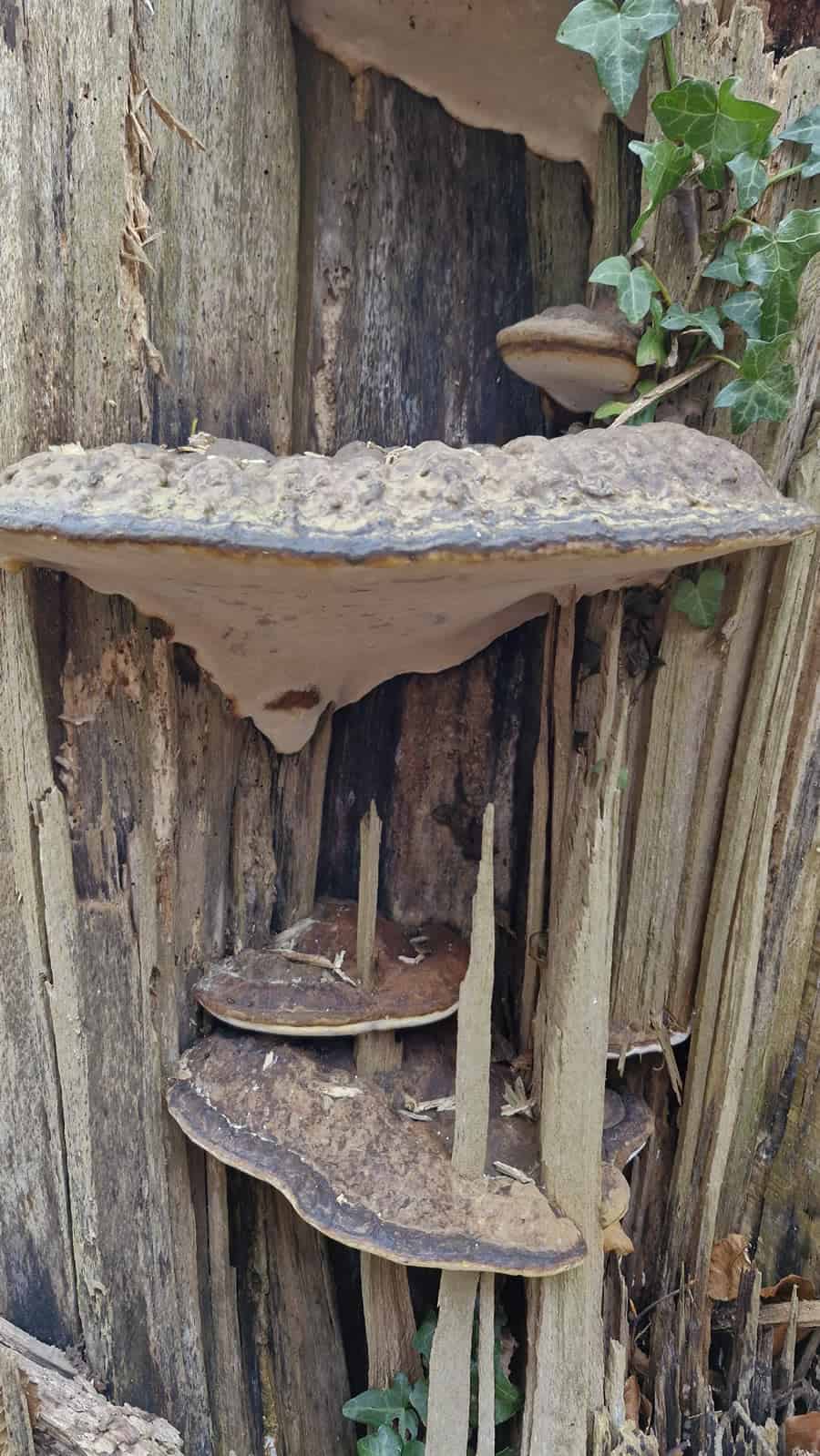
Ganoderma australe is a species of bracket fungus commonly found in Ireland and the UK. It typically affects mature broadleaf trees, such as beech (Fagus sylvatica), oak (Quercus spp.), horse chestnut (Aesculus hippocastanum), maple (Acer spp.) and also occasionally appears on conifers.
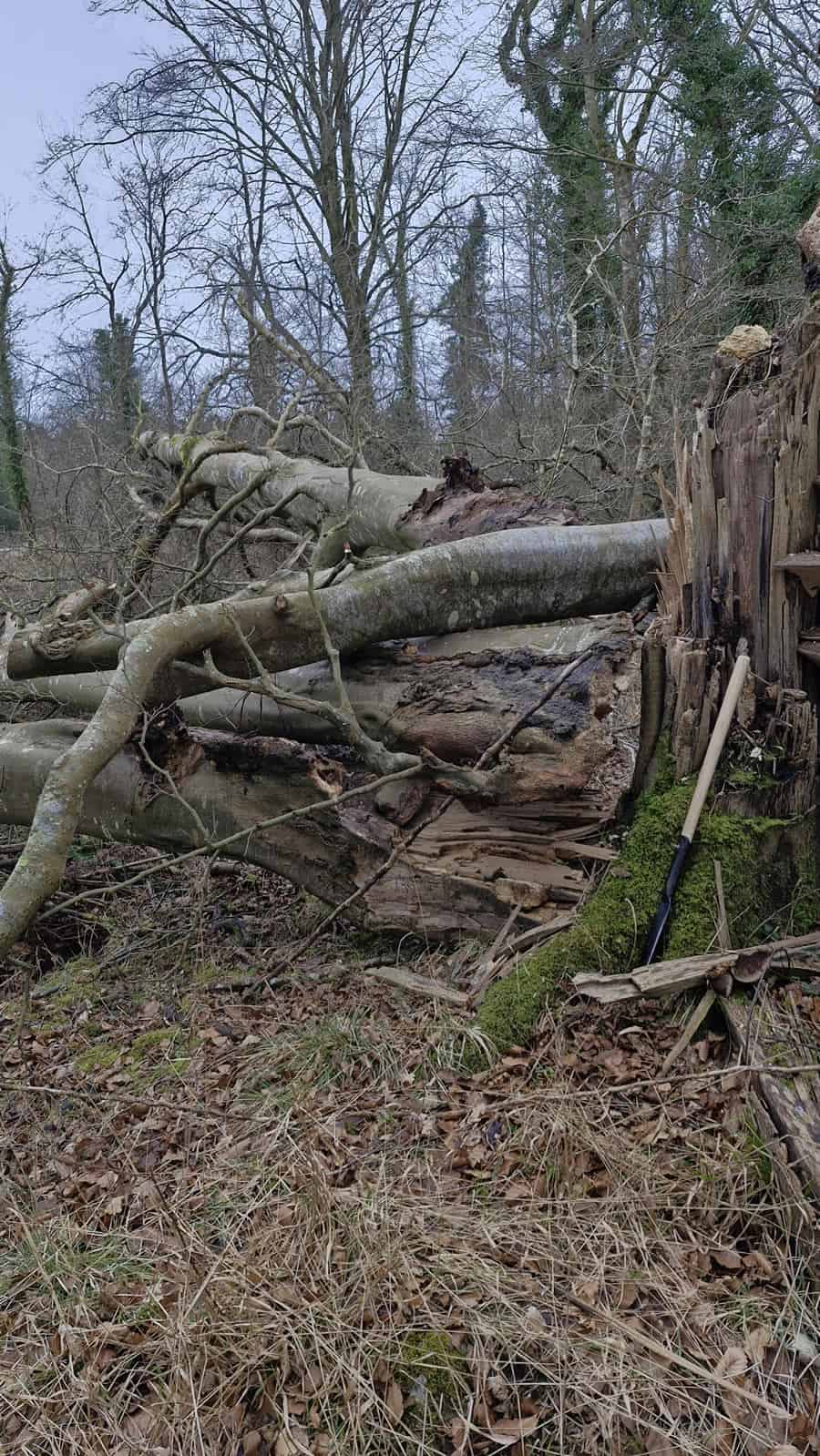
Whilst Ganoderma australe plays a natural role in woodland ecosystems as a decomposer of dead wood, it does cause selective white rot, a form of wood decay that mainly breaks down lignin, leading to a soft, cellulose rich decay in the ripewood of beech (in this instance).
The fungus typically enters through wounds, pruning cuts, or root damage and spreads internally over time which causes structural weakness although the tree may look healthy externally. But decay inside the bole, or major roots can lead to significant loss of structural integrity, increasing the risk of stem collapse, as in the photo, or windthrow. That said, trees can remain standing for many years due to partially decayed wood retaining its tensile strength and the tree reinforcing the residual wall with reaction wood.
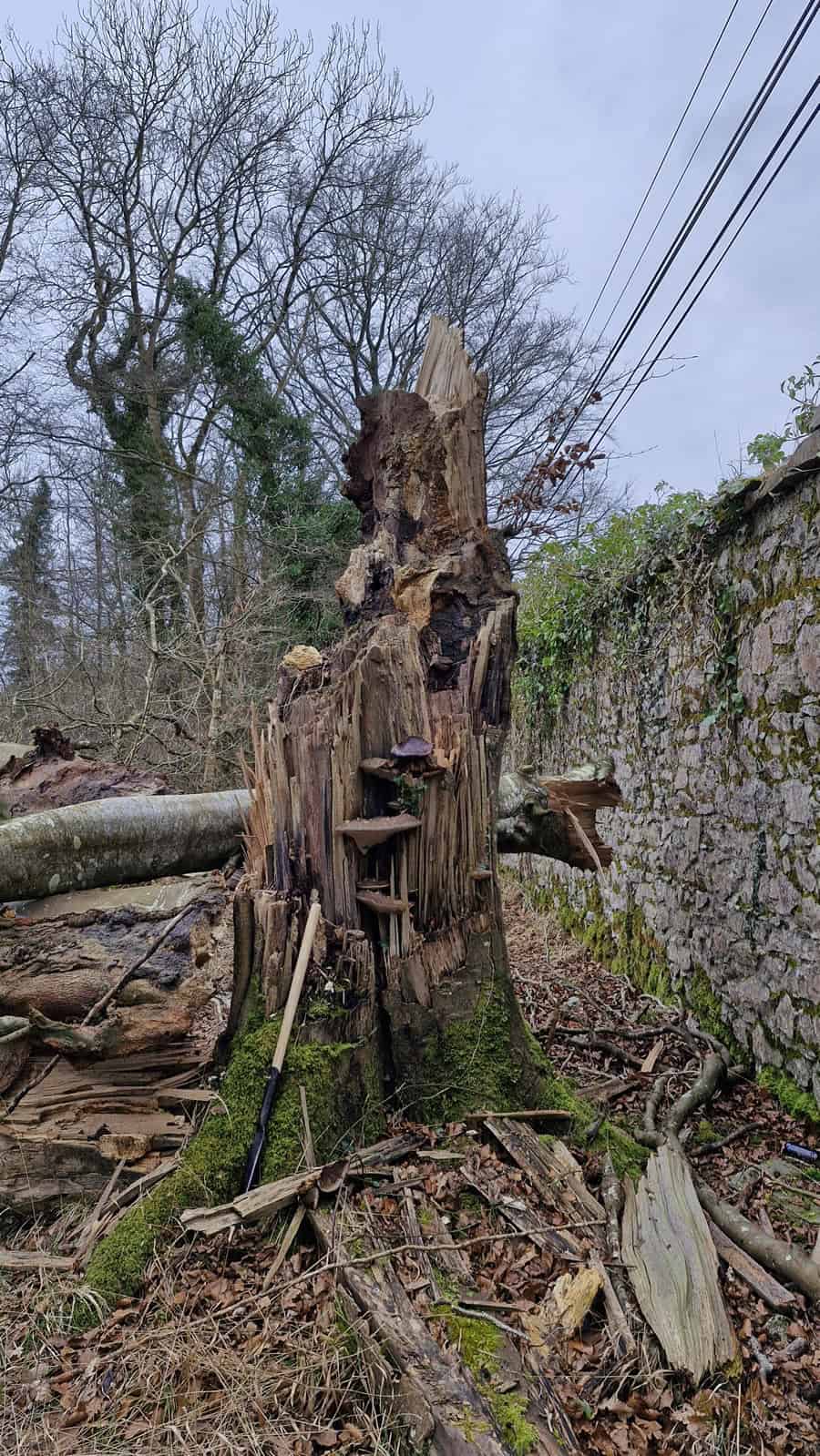
However, on living trees, especially in urban or landscaped settings, its presence is often a sign of advanced internal decay and elevated risk. Trees with Ganoderma australe should be professionally assessed by a Veon arboriculturist using resistograph testing or other decay detection tools to determine extent of internal decay.
Veon Arboriculturalists assess if a tree’s structural risk is high and may recommend remedial pruning or removal which may be necessary in “target rich” environments and especially near property or high human traffic areas.
#veonarboriculture #urbantrees #fungus #nativetrees #forestry #veon #landscaping #resistographtesting #ganodermaaustrale #trees #arboriculture #decay #biodiversity #treeriskassessment #treesurveys