

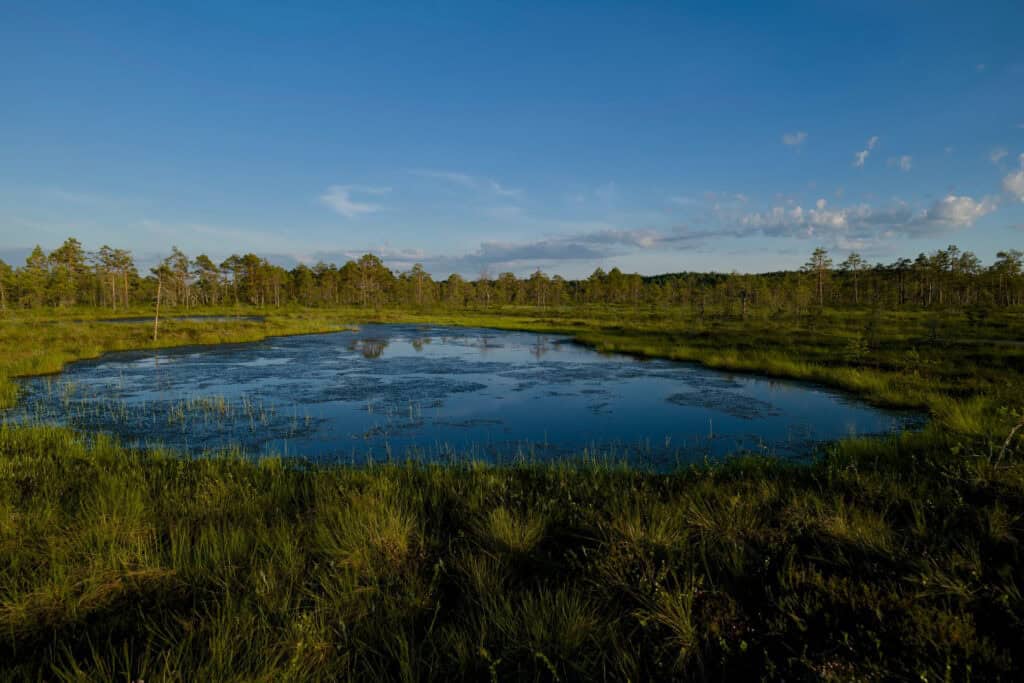
Nature restoration is becoming part of mainstream planning
Ireland is preparing its first National Nature Restoration Plan under the EU Nature Restoration Regulation. The Regulation requires Member States to plan for the recovery of degraded ecosystems and to contribute to European restoration targets. Ireland’s draft plan is due under EU rules by 1 September 2026.
The detailed Irish measures will be shaped through the national planning process. It would therefore be premature to claim that a particular land parcel or development will be subject to a specific new obligation. What can be said with confidence is that the condition, resilience and connectivity of habitats will receive greater attention in national and local decision-making.
What nature restoration means
Nature restoration is not the same as leaving every site untouched. It is the process of helping damaged or degraded ecosystems recover. Depending on the location, this may involve restoring wetland hydrology, improving a river corridor, managing invasive species, allowing native woodland to regenerate, improving species-rich grassland or reconnecting habitats that have become isolated.
Good restoration is based on the needs of the site. Planting trees may be valuable in one location and damaging in another. A wet grassland, peatland or open habitat should not automatically be planted simply because tree planting appears positive. The existing habitat, soils, hydrology, species and surrounding landscape must be understood first.
Why developers and landowners should pay attention
The Nature Restoration Plan will primarily be a national programme, but its influence is likely to extend into public policy, land management, infrastructure planning and funding. Public authorities may place greater emphasis on restoration opportunities when preparing plans, managing land or assessing projects. Private organisations may also face stronger expectations from investors, clients and communities.
For a development project, early knowledge creates options. If valuable habitat is identified before a layout is fixed, it may be possible to retain it and avoid complex mitigation. If an area has good restoration potential, it can be incorporated into open space or a biodiversity management plan. If ecological constraints are discovered late, the same issues can result in redesign, additional surveys or programme delay.
Start with a reliable ecological baseline
A restoration proposal needs a clear starting point. A baseline should describe the habitats present, their condition, the species they support, the movement of water through the site and the relationship between the site and the wider landscape. The assessment should be proportionate to the scale and sensitivity of the project.
The baseline also makes later claims measurable. Without it, a business may be able to describe actions, but it cannot demonstrate whether habitat condition improved. A sound baseline allows objectives, indicators and monitoring arrangements to be set from the beginning.
Practical steps for project teams
Developers and landowners do not need to wait for every policy detail before taking sensible action. They can commission an early ecological constraints review, map protected and potentially valuable habitats, examine ecological connections beyond the site boundary and identify survey requirements before seasonal windows close.
Project teams should also distinguish avoidance, mitigation, compensation and enhancement. Retaining a functioning habitat is normally more reliable than attempting to recreate it after damage. Restoration and enhancement measures should have clear objectives, realistic maintenance arrangements and a method for checking results.
How Veon can help
Veon provides integrated ecology, forestry and arboriculture consultancy services across Ireland. We help clients establish ecological baselines, understand planning and legal constraints, prepare habitat and biodiversity management plans and monitor the results of agreed measures.
Ireland’s Nature Restoration Plan will develop further as policy is finalised and implemented. Organisations that understand their land now will be better placed to respond. Early ecological advice can protect project certainty while also identifying practical ways to improve the long-term condition and resilience of the land.